Gluconeogenesis: When and How
Glucose synthesis mechanisms from non-carbohydrate substrates
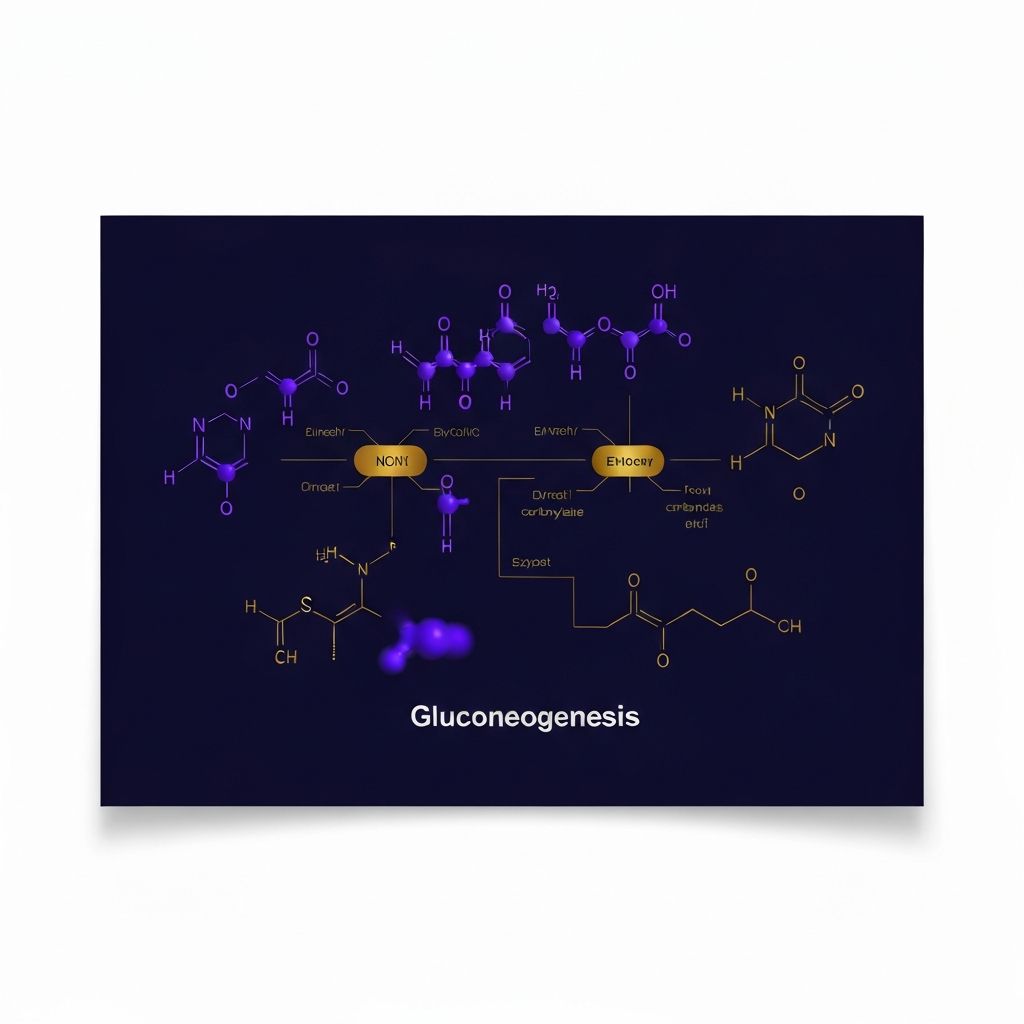
Overview of Gluconeogenesis
Gluconeogenesis is the metabolic pathway that synthesises glucose from non-carbohydrate substrates, including lactate, amino acids, and glycerol. This process is essential for maintaining blood glucose levels during fasting periods, overnight sleep, and intense physical activity. Approximately 90% of gluconeogenesis occurs in the liver, with the remainder occurring in the kidneys.
Substrates for Gluconeogenesis
Lactate: Lactate is released from muscle during exercise and from red blood cells continuously. It is transported to the liver where it is converted back to glucose through gluconeogenesis (Cori cycle). This represents an important cycle linking muscle and hepatic metabolism.
Amino Acids: Amino acids, particularly alanine, are transported from muscle to the liver. The amino group is transferred to pyruvate through transamination, producing alanine. In the liver, this alanine-glucose cycle (glucose-alanine cycle) returns glucose to the muscle and delivers nitrogen for urea synthesis.
Glycerol: Glycerol released from triglyceride breakdown in adipose tissue is transported to the liver where it can be phosphorylated to glycerol-3-phosphate and subsequently converted to glucose through gluconeogenesis.
Odd-Chain Fatty Acids: Oxidation of odd-chain fatty acids produces propionyl-CoA, which is converted to succinyl-CoA and serves as a gluconeogenic substrate.
Gluconeogenesis Pathway
Gluconeogenesis essentially reverses glycolysis but requires additional enzymatic steps to bypass the three irreversible glycolytic reactions. The key glucose-producing steps are:
Step 1 - Pyruvate Carboxylase: Pyruvate is carboxylated to oxaloacetate in mitochondria. This is an ATP-dependent reaction and the first committed step of gluconeogenesis. This enzyme is biotin-dependent and is activated by acetyl-CoA.
Step 2 - PEPCK: Oxaloacetate is decarboxylated and phosphorylated to phosphoenolpyruvate (PEP) by phosphoenolpyruvate carboxykinase (PEPCK), generating GTP. This reaction occurs in mitochondria in the liver.
Step 3 - PEP to Glucose: PEP is converted through the normal glycolytic intermediates in reverse, eventually producing glucose-6-phosphate.
Step 4 - Glucose-6-Phosphatase: Glucose-6-phosphate is hydrolysed to free glucose by glucose-6-phosphatase, which is present in the liver and kidneys but not in muscle. This final step allows glucose release into the bloodstream.
Energy Cost of Gluconeogenesis
Unlike glycolysis, which is an energy-generating process, gluconeogenesis is energy-intensive. The synthesis of one glucose molecule from pyruvate requires 4 ATP and 2 GTP (or 6 ATP equivalents total). This high cost reflects the biosynthetic nature of the pathway and the need for tight regulation to prevent futile cycling.
Regulation of Gluconeogenesis
Gluconeogenesis is tightly regulated through multiple mechanisms to prevent wasteful synthesis when glucose is abundant. Hormonal regulation is paramount. Glucagon, released during fasting states, activates adenylyl cyclase, increasing cAMP and activating PKA. PKA then phosphorylates and inactivates acetyl-CoA carboxylase, reducing malonyl-CoA levels and preventing fatty acid synthesis.
Allosteric regulation: Gluconeogenic enzymes (pyruvate carboxylase, PEPCK) are activated by acetyl-CoA, indicating fat oxidation and energy abundance. Glucose-6-phosphatase activity is promoted during fasting when glucose synthesis is needed.
Substrate availability: Gluconeogenesis is only possible when substrates (pyruvate, lactate, amino acids) are available. The rate is influenced by substrate concentration and transport rates into hepatic cells.
Metabolic States and Gluconeogenesis
Fed State: After carbohydrate-rich meals, insulin levels rise and gluconeogenesis is suppressed. Glucose absorption from the intestine satisfies glucose requirements.
Fasting State: After 12-16 hours of fasting, hepatic glycogen stores are depleted. Gluconeogenesis becomes the primary source of glucose production to maintain blood glucose for brain and red blood cell function.
Prolonged Fasting: After several days of fasting, gluconeogenesis from amino acids continues but protein breakdown increases to provide substrates. Eventually, ketone bodies produced from lipid oxidation become a major fuel source, reducing glucose requirements.
Exercise and Gluconeogenesis
During intense or prolonged physical exercise, gluconeogenesis increases to maintain blood glucose despite muscle uptake. Lactate from muscle is recycled to glucose in the liver (Cori cycle). The glucose-alanine cycle also becomes activated, transporting amino acids from muscle to the liver for gluconeogenesis.
The Glucose-Alanine Cycle
During fasting and exercise, muscle proteins are broken down for amino acids. Amino groups are transferred to pyruvate (from glycolysis or amino acid catabolism) to form alanine. Alanine is transported to the liver where it is transaminated back to pyruvate and then gluconeogenic conversion produces glucose. This cycle represents an important interorgan cycle linking glucose production to amino acid metabolism.
Variations in Gluconeogenic Capacity
Individual differences in gluconeogenic capacity reflect variations in enzyme expression, mitochondrial density, substrate availability, hormonal sensitivity, and genetic factors. Physical training enhances gluconeogenic capacity, particularly in endurance athletes. Metabolic disease states (diabetes, hypoglycaemia) may alter gluconeogenic regulation, resulting in inappropriately high or low glucose production.
Educational Information
This article provides general biochemical information about gluconeogenesis. It is not medical advice and should not be used for diagnostic or treatment purposes. For specific health concerns, consult qualified healthcare professionals.