Hormones Directing Metabolic Flow
Insulin, glucagon, and their roles in metabolic pathway regulation
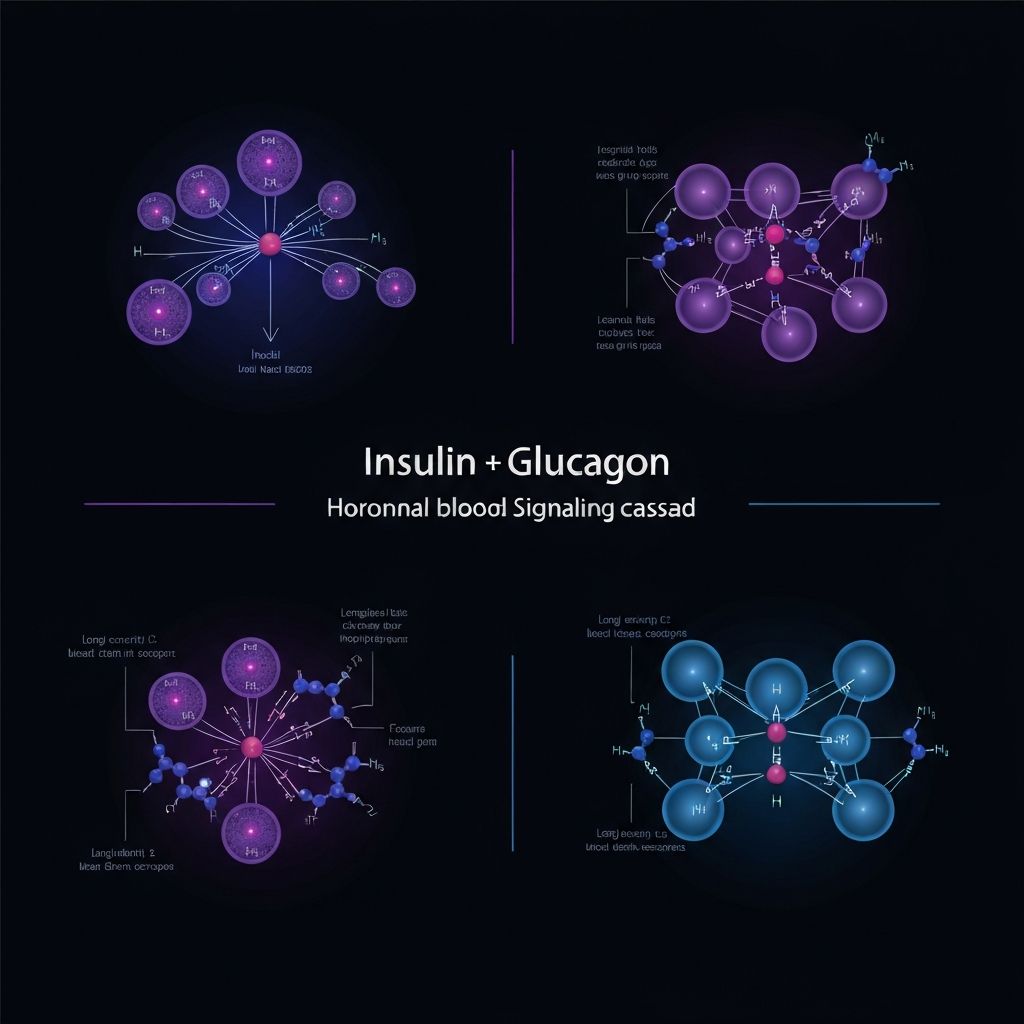
Hormonal Control of Metabolism
The human body maintains metabolic homeostasis through coordinated hormonal signaling that directs the flow of substrates through various metabolic pathways. The two primary hormones orchestrating this metabolic direction are insulin and glucagon, which work in opposition to maintain blood glucose and energy balance.
Insulin: The Fed-State Hormone
Insulin is a 51-amino acid peptide hormone synthesised in the pancreatic beta cells. It is released in response to elevated blood glucose, amino acids, and certain hormonal signals. Insulin exerts profound effects on metabolic pathways, promoting anabolic (biosynthetic) processes and suppressing catabolic (breakdown) processes.
Effects on Carbohydrate Metabolism: Insulin promotes glucose uptake into muscle and adipose tissue through translocation of GLUT4 glucose transporters to the cell membrane. It activates glycolysis by activating phosphofructokinase (PFK) and also promotes glycogen synthesis whilst suppressing glycogenolysis and gluconeogenesis.
Effects on Fat Metabolism: Insulin promotes fatty acid synthesis by activating acetyl-CoA carboxylase and suppressing malonyl-CoA degradation. This increases malonyl-CoA levels, which inhibit CPT-I and prevent beta-oxidation. Insulin also promotes triglyceride synthesis and storage in adipose tissue whilst inhibiting lipolysis.
Effects on Protein Metabolism: Insulin promotes amino acid uptake and protein synthesis whilst suppressing protein breakdown and amino acid oxidation. It does this through mTOR signaling and by suppressing autophagy.
Mechanism of Action: Insulin binds to insulin receptors on target cells, activating receptor tyrosine kinase signaling. This generates second messengers including phosphatidylinositol-3-kinase (PI3K) and mitogen-activated protein kinase (MAPK) cascades, ultimately phosphorylating metabolic enzymes and affecting gene expression.
Glucagon: The Fasting-State Hormone
Glucagon is a 29-amino acid peptide hormone synthesised in pancreatic alpha cells. It is released in response to low blood glucose and elevated amino acids during fasting or between meals. Glucagon exerts opposing effects to insulin, promoting catabolic processes to mobilise energy and maintain blood glucose.
Effects on Carbohydrate Metabolism: Glucagon promotes glycogenolysis (breakdown of liver glycogen) through phosphorylation and activation of phosphorylase. It also promotes gluconeogenesis through activation of key gluconeogenic enzymes. The net effect is increased blood glucose production.
Effects on Fat Metabolism: Glucagon promotes lipolysis in adipose tissue through activation of hormone-sensitive lipase. Released fatty acids are transported to the liver for oxidation. Glucagon inhibits fatty acid synthesis through inactivation of acetyl-CoA carboxylase, reducing malonyl-CoA and allowing beta-oxidation to proceed.
Effects on Protein Metabolism: Glucagon promotes amino acid uptake by the liver and supports gluconeogenesis from amino acids. It also facilitates the glucose-alanine cycle through which amino acids are transported from muscle to the liver.
Mechanism of Action: Glucagon binds to glucagon receptors, which are G-protein coupled receptors. Receptor activation stimulates adenylyl cyclase, increasing intracellular cAMP levels. cAMP activates protein kinase A (PKA), which phosphorylates and inactivates glycolytic enzymes whilst phosphorylating and activating gluconeogenic enzymes.
The Insulin:Glucagon Ratio
The metabolic state of the body is determined not by absolute insulin or glucagon levels, but by their ratio. A high insulin:glucagon ratio indicates fed state and promotes anabolic processes. A low ratio indicates fasting state and promotes catabolic processes. This ratio-based control allows fine metabolic tuning in response to nutrient availability.
Additional Regulatory Hormones
Epinephrine: Released during "fight or flight" responses, epinephrine promotes glycogenolysis and lipolysis, rapidly providing energy substrates. It increases metabolic rate and shifts metabolism toward carbohydrate and fat oxidation.
Cortisol: Released during stress and fasting, cortisol promotes gluconeogenesis and proteolysis, mobilising amino acids and glucose. It also promotes lipolysis and increases metabolic rate.
Thyroid Hormones: Thyroid hormones (T3 and T4) increase metabolic rate and affect the efficiency of all metabolic pathways. They increase oxygen consumption and heat production.
Growth Hormone: Growth hormone promotes lipolysis and gluconeogenesis whilst suppressing insulin secretion, favouring catabolic metabolism during fasting.
Fed-State Metabolism
In the fed state (after a meal), blood glucose and amino acids are elevated, triggering insulin secretion and suppressing glucagon. High insulin:glucagon ratio promotes:
- Glucose uptake and glycolysis
- Glycogen synthesis
- Fatty acid synthesis and triglyceride storage
- Protein synthesis
- Suppression of gluconeogenesis and lipolysis
Fasting-State Metabolism
In the fasting state (between meals or during prolonged fasting), blood glucose and insulin decrease whilst glucagon increases. Low insulin:glucagon ratio promotes:
- Glycogenolysis and gluconeogenesis (maintaining blood glucose)
- Lipolysis and fatty acid oxidation
- Protein breakdown and amino acid oxidation
- Ketone body production
- Suppression of anabolic processes
Metabolic Adaptation to Nutrient Composition
The metabolic response varies depending on macronutrient composition of the diet. Carbohydrate-rich meals strongly stimulate insulin, promoting glycolytic and lipogenic pathways. Fat-rich meals produce more moderate insulin responses, allowing greater fatty acid oxidation. Protein intake stimulates both insulin and glucagon, promoting amino acid oxidation and gluconeogenesis alongside protein synthesis.
Individual Variations in Hormonal Sensitivity
Individuals vary in their sensitivity to insulin and glucagon signaling based on genetic factors, physical activity levels, body composition, dietary history, and metabolic disease state. Insulin resistance, where tissues show reduced responsiveness to insulin, represents an important metabolic condition affecting metabolic pathway direction and glucose homeostasis.
Educational Information
This article provides general biochemical information about hormonal regulation of metabolism. It is not medical advice and should not be used for diagnostic or treatment purposes. For specific health concerns, consult qualified healthcare professionals.